Autumn Quince Lemon Almond Cake Delight

Some cakes smell like a season before you even cut the first slice. This one begins with quince softening gently on the stove, its floral perfume rising with lemon zest, sugar, and a little butter. Then come toasted almonds, a tender golden dough, and the kind of warm, fruity aroma that makes a kitchen feel instantly cosier.
Quince has a quiet charm. Raw, it is firm and tart, almost too stubborn to enjoy. Cooked, it turns mellow, fragrant, and honeyed, with a flavour somewhere between apple, pear, citrus, and rose. In this cake, that brightness meets lemon and almonds in a simple autumn bake that feels special without being fussy.
This is the kind of cake to make on a cool afternoon, when the light fades early and a pot of tea sounds like the right answer to everything. It works beautifully as a weekend dessert, a coffee cake for guests, or a homemade treat to share after lunch. If you have been looking for an autumn cake recipe that feels both rustic and elegant, this quince cake is a lovely place to start.
The dough is soft and buttery, rich enough to hold the filling but not heavy. The filling is gently cooked so the quince becomes tender before baking, which gives the finished cake a jammy centre with small, delicate pieces of fruit. Lemon keeps everything fresh, while almonds add sweetness, texture, and a nutty finish.

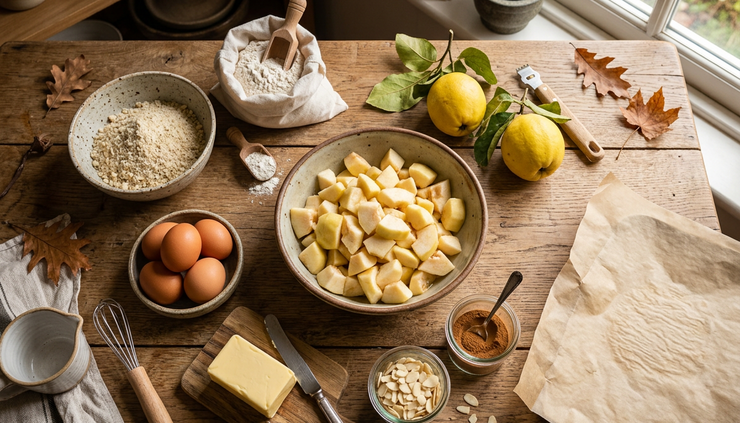
Ingredients for quince lemon almond cake
This recipe makes one round cake, about 22 cm in diameter. It serves 8 to 10 slices, depending on how generously you cut it.
For the best texture, bring the butter and eggs to room temperature before you begin. Quince needs a little prep, but the filling can be made while the dough rests, so the whole recipe moves along nicely.
For the dough
250 g plain flour
100 g ground almonds
120 g unsalted butter, softened
100 g granulated sugar
2 medium eggs
1 teaspoon baking powder
1 teaspoon vanilla sugar or 1 teaspoon vanilla extract
Finely grated zest of 1 lemon
2 tablespoons milk, if needed
A pinch of salt
For the quince filling
500 g quince, peeled, cored, and cut into small cubes
70 g granulated sugar
Juice of 1 lemon
Finely grated zest of 1 lemon
30 g unsalted butter
3 tablespoons water
1 teaspoon cinnamon
40 g flaked or chopped almonds
1 tablespoon honey, optional
For finishing
2 tablespoons flaked almonds
1 tablespoon granulated sugar
Icing sugar, for dusting after baking
A note on the fruit: quince browns quickly once cut, so toss the pieces with lemon juice as soon as possible. The lemon does more than protect the colour. It also brings out the floral side of the quince and balances the buttery dough.
If your quince is very firm, cut it into smaller cubes so it softens evenly. If you have slightly larger quinces, weigh the prepared fruit after peeling and coring for the most reliable result.
Preparation Steps
1. Prepare the cake tin
Heat the oven to 180°C. Grease a 22 cm round springform tin with butter, then line the base with baking paper. Dust the sides lightly with flour, tapping out the excess.
This cake has a moist filling, so the lined tin helps you remove it cleanly once it has cooled. If your springform tin tends to leak, place it on a baking tray before baking.
2. Make the quince filling
Peel and core the quince, then cut it into small cubes. Add the pieces to a saucepan with the lemon juice, lemon zest, sugar, butter, water, and cinnamon.
Cook over medium-low heat for 12 to 15 minutes, stirring now and then. The quince should soften slightly but still hold its shape. It will continue cooking in the oven, so do not turn it into a purée.
When the fruit looks glossy and the liquid has reduced to a light syrup, stir in the almonds and honey, if using. Remove the pan from the heat and let the filling cool while you make the dough.
The filling should be fragrant and spoonable, not watery. If you see too much liquid in the pan, cook it for another few minutes. A thick filling gives the cake a better structure and keeps the centre from becoming soggy.
3. Cream the butter and sugar
Place the softened butter and sugar in a mixing bowl. Beat them together until pale and creamy. This takes about 2 to 3 minutes with an electric mixer, or a little longer by hand.
Add the vanilla and lemon zest, then mix again. The lemon oils release into the butter, which helps spread that bright citrus flavour through the dough.
4. Add the eggs
Add the eggs one at a time, beating well after each addition. If the mixture looks slightly curdled, do not worry. It will come together once the flour and almonds go in.
Eggs give the dough lift and tenderness, so take a moment here. A well-mixed base makes a softer cake.
5. Mix the dry ingredients
In a separate bowl, combine the plain flour, ground almonds, baking powder, and salt. Stir with a whisk or fork to distribute the baking powder evenly.
Add the dry mixture to the butter mixture in two batches. Mix gently after each addition. The dough should be soft, thick, and slightly sticky. If it feels too stiff, add 1 to 2 tablespoons of milk.
Avoid overmixing once the flour goes in. Gentle mixing keeps the cake tender rather than dense.
6. Assemble the cake
Spoon about two-thirds of the dough into the prepared tin. Spread it evenly across the base and slightly up the sides. You can use the back of a spoon or lightly floured fingertips.
Add the cooled quince filling and spread it in an even layer, leaving a small border around the edge. Dot the remaining dough over the top in small spoonfuls. It does not need to cover the filling completely. A few gaps allow the quince to peek through and make the cake look homemade in the best way.
Sprinkle the top with flaked almonds and granulated sugar. The sugar creates a light crunch, and the almonds toast as the cake bakes.
7. Bake until golden
Bake for 40 to 45 minutes, or until the top is golden and a skewer inserted into the dough portion comes out clean. If the almonds brown too quickly, loosely cover the cake with baking paper for the last 10 minutes.
The centre may look slightly soft because of the fruit filling, but the dough should be baked through. The cake will settle and firm as it cools.
8. Cool before slicing
Let the cake cool in the tin for 15 minutes. Run a small knife around the edge, then release the springform ring. Leave the cake to cool for at least another 30 minutes before slicing.
This short wait makes a real difference. The warm filling needs time to set, and the flavours become clearer as the cake cools. Serve it slightly warm, at room temperature, or chilled the next day.
Tips
Choose ripe quinces when possible
Ripe quince should smell floral and fruity, even before you cut it. The skin is usually yellow, sometimes with a little fuzz. Very green quince can still be used, but it may need a few extra minutes on the stove.
If the fruit is hard to peel, use a sturdy vegetable peeler and work slowly. Quince can be dense, so a sharp knife makes the prep easier and safer.
Toast the almonds for deeper flavour
For a stronger nutty note, lightly toast the flaked almonds before adding them to the filling or sprinkling them on top. Use a dry pan over low heat and stir often. They can burn quickly, so remove them as soon as they turn pale golden.
This small step makes the cake smell even warmer and gives the topping a lovely crisp edge.
Adjust the sweetness to the fruit
Quince varies in tartness. If your fruit tastes very sharp after cooking, add a little more honey to the filling. If it tastes mellow and sweet, skip the honey and let the lemon keep the cake bright.
The balance of quince, lemon, and almonds is what makes this cake so appealing. You want the fruit to shine, not disappear under too much sugar.
Add a little spice
Cinnamon is gentle and familiar, but you can shift the flavour with other spices.
Good additions include:
A pinch of ground cardamom for a floral note
A little ground ginger for warmth
A small pinch of cloves for a deeper autumn flavour
A scrape of fresh nutmeg in the dough
Use spices lightly. Quince has a delicate perfume, and too much spice can cover it.
Try a different shape
A round springform cake looks beautiful, but the recipe also works in a square baking tin of similar volume. Cut it into small squares for a tea table, picnic, or holiday tray.
You can also bake it as a shallow tart-style cake. In that case, spread the dough thinner, watch the baking time, and start checking after about 30 minutes.
Serve it simply
This cake does not need much decoration. A dusting of icing sugar is enough. Still, a few simple additions can make it feel more dessert-like.
Try serving it with:
Thick yoghurt and a drizzle of honey
Softly whipped cream
Vanilla ice cream
Crème fraîche
A small cup of strong coffee
Black tea with lemon
For an autumn gathering, serve slices slightly warm with whipped cream and a few toasted almonds scattered over the plate. It feels generous but still homey.
Make it ahead
This cake keeps well for 2 to 3 days in a covered container. Store it at room temperature if your kitchen is cool, or refrigerate it if the room is warm.
The flavour often improves after a night of resting. The quince settles into the crumb, the lemon softens, and the almonds become more rounded. If serving the next day, dust with icing sugar just before bringing it to the table.
Use apples or pears if needed
Quince gives the cake its special character, but apples or firm pears can step in if quince is hard to find. Choose fruit that holds its shape when cooked. Reduce the stovetop cooking time, since apples and pears soften faster than quince.
A mix of quince and apple also works beautifully. The apple adds juiciness, while the quince keeps its perfume and gentle tartness.
Conclusion
A good autumn cake should bring comfort without feeling heavy. This quince, lemon, and almond cake does exactly that. It has a soft crumb, a fragrant fruit filling, a crisp almond top, and enough citrus brightness to make every slice feel fresh.
The recipe is simple enough for a relaxed weekend bake, yet charming enough for guests. Take your time with the quince, let the filling cool, and give the cake a little rest before slicing. Those small details help the flavours come together.
Bake it on a cool day, share it with someone who loves homemade cakes, and make it your own with a favourite spice or serving idea. If you try this recipe, share how it turned out and what you served with it. A cake like this is even better when it becomes part of someone else’s autumn table.


Comments