How to Make Richer Mushroom Soup with Sautéed Mushrooms

Mushroom soup can taste deep, cozy, and almost meaty, or it can taste like mushrooms boiled in water. The difference usually comes down to one step: sautéing the mushrooms long enough before adding liquid.
That’s the move that turns a simple autumn soup into something rich and satisfying. Mushrooms hold a lot of moisture. If they go straight into broth, that moisture dilutes the pot. If they hit a hot pan first, they release water, dry out a bit, brown at the edges, and build the kind of flavor you actually want in a bowl of soup.
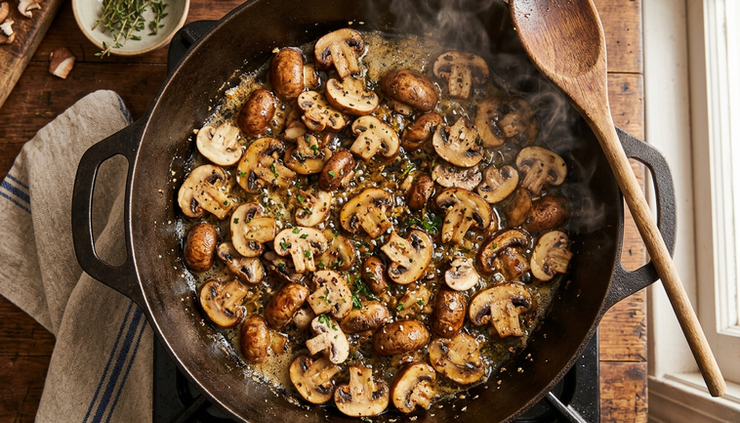
Start by choosing mushrooms that bring flavor
You don’t need rare mushrooms to make a great soup. Everyday mushrooms work beautifully if you treat them well.
A mix is best because each type adds something different:
White button mushrooms bring mild, clean flavor.
Cremini mushrooms taste deeper and earthier.
Portobello mushrooms add a darker, richer base when chopped.
Shiitake mushrooms bring a savory, almost smoky note.
If you only have one kind, that’s fine. Cremini mushrooms are a great all-purpose choice. They’re easy to find, affordable, and flavorful enough for a soup that doesn’t need much help.
Before cooking, wipe mushrooms with a damp towel or rinse them quickly and dry them well. Don’t let them soak. Mushrooms act like little sponges, and extra water slows down browning.
Slice them evenly, but don’t make them paper-thin. Medium slices hold their shape better and give the soup a nicer texture.
Sauté the mushrooms until they stop steaming and start browning
This is the part that matters most. Add mushrooms to a wide pot with a little butter, olive oil, or both. Use medium-high heat, and don’t overcrowd the pan if you can help it.
At first, the mushrooms will look like they’re absorbing all the fat. Then they’ll release a surprising amount of liquid. Let that liquid cook off. Stir now and then, but don’t fuss with them constantly. They need contact with the hot pot to brown.
You’ll know they’re ready when:
The pan looks mostly dry.
The mushrooms have shrunk.
The edges are golden brown.
The smell changes from raw and earthy to rich and savory.
This can take 10 to 15 minutes, sometimes longer if the pot is crowded. Don’t rush it. Browning is where the flavor builds.
A pinch of salt helps draw out moisture, but go easy at first. You can adjust the seasoning later after the broth reduces and the soup comes together.
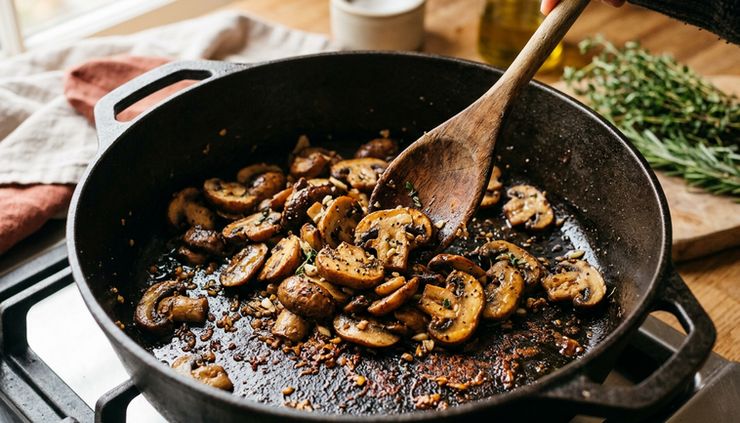
Add aromatics after the mushrooms have browned
It might seem natural to start with onion and garlic, but mushrooms need more time and higher heat. Garlic burns quickly, and onion can release extra moisture that slows down browning.
Once the mushrooms are browned, lower the heat a bit and add diced onion or shallot. Cook until softened, about 4 to 5 minutes. Then add minced garlic for the last minute, just until fragrant.
Thyme is a classic for a reason. It pairs perfectly with mushrooms and makes the soup taste like autumn in the best way. A bay leaf, a little rosemary, or a small pinch of sage can also work, but use stronger herbs lightly. Mushrooms have a gentle flavor, and you don’t want to cover it up.
If browned bits are stuck to the bottom of the pot, that’s good. Add a splash of broth and scrape them up with a wooden spoon. Those bits add a lot of flavor to the soup.
For the broth, use vegetable or chicken broth, depending on what you like. Start with enough to cover the mushrooms by an inch or so. You can always add more if the soup gets too thick.
Make it hearty with grains or potatoes
A simple mushroom soup is lovely, but sometimes you want dinner in a bowl. That’s where barley, potatoes, or rice come in.
Barley is especially good with mushrooms. It has a chewy texture and nutty flavor that makes the soup feel filling without being heavy. Pearled barley cooks faster than hulled barley, so it’s the easier choice for weeknight soup.
Potatoes make the soup softer and cozier. Yukon gold potatoes are a nice pick because they turn creamy without falling apart too much. Dice them small so they cook evenly.
Rice works well if you want something simple. A little goes a long way, since rice keeps absorbing liquid as it sits. If you’re planning leftovers, cook the rice separately and add it to each bowl so the soup doesn’t thicken too much overnight.
A good basic path looks like this:
Brown the mushrooms well.
Add onion, garlic, and herbs.
Pour in broth and scrape the pot.
Add barley, potatoes, or rice.
Simmer until everything is tender.
Taste and adjust salt and pepper.

Finish with cream without making it heavy
Creamy mushroom soup doesn’t need to be loaded with cream. In fact, too much cream can flatten the mushroom flavor you worked so hard to build.
For a simple creamy version, simmer the soup until the mushrooms are tender, then stir in a small splash of heavy cream near the end. Start with 1/4 cup for a medium pot of soup. Taste it, then add more only if you want it richer.
If you like a thicker texture, blend part of the soup instead of adding more cream. An immersion blender makes this easy. Blend just a portion so the soup stays creamy but still has pieces of mushroom. You can also transfer a couple of cups to a blender, puree until smooth, and stir it back in.
Add cream after the soup stops boiling. Gentle heat keeps the texture smooth. Once the cream is in, warm it through, taste again, and finish with black pepper or a little fresh parsley.
A flexible mushroom soup recipe to use all season
Here’s a loose recipe you can adjust based on what’s in your kitchen.
Ingredients
1 1/2 to 2 pounds mushrooms, sliced
2 tablespoons butter or olive oil, plus more if needed
1 medium onion, diced
2 to 3 garlic cloves, minced
1 teaspoon fresh thyme leaves, or 1/2 teaspoon dried thyme
6 cups broth
1/2 cup pearled barley, or 2 diced potatoes, or 1/3 cup rice
1/4 to 1/2 cup heavy cream, optional
Salt and black pepper
Fresh parsley, optional
Method
Heat the butter or oil in a wide soup pot. Add the mushrooms and cook until they release their moisture, the liquid evaporates, and the edges brown.
Add the onion and cook until soft. Stir in the garlic and thyme for about a minute. Pour in the broth, scraping the bottom of the pot.
Add barley, potatoes, or rice if using. Simmer until tender, then stir in cream if you want a creamy finish. Taste, season, and serve hot.

The main takeaway is simple: don’t add broth too soon. Let the mushrooms cook down, dry out, and brown first. Once you do that, the rest of the soup can stay easy. A few aromatics, good broth, maybe barley or potatoes, and a little cream at the end are enough to make mushroom soup taste deeper, warmer, and much more satisfying.


Comments