Guard Your Mind, Protect Your Most Valuable Space

The most expensive square meter in the world isn’t in Manhattan, Monaco, or some glassy penthouse with a bathtub that judges your tax bracket. It’s your head.
That tiny bit of invisible real estate holds your focus, peace, ideas, memories, plans, fears, and the song lyric you haven’t been able to delete since 2009. It’s crowded in there. So why let random people, old arguments, doom-scrolling, and one rude comment from Tuesday move in rent-free?
Your mind is valuable space. Treat it like prime property. Put up a fence. Check references. Raise the rent.

Your attention is not pocket change
Attention feels free because nobody asks for a credit card at the door. But it costs you plenty.
Every interruption takes a little bite. Every petty replay of an argument burns fuel. Every “quick check” of your phone can turn into a 27-minute expedition through recipes, celebrity drama, and a raccoon stealing cat food. Suddenly your brain has become an unpaid intern for the internet.
Your attention is where your life goes first. Before time, before money, before energy, attention leads the parade with a tiny baton.
That means you get to be picky.
Not everything deserves a front-row seat in your mind. Some things belong in the nosebleeds. Some things shouldn’t be in the building at all. A stranger’s bad mood? Denied. A comment from someone who doesn’t know you? Denied. A worry you’ve solved 14 times already? Sir, please leave the premises.
This isn’t about pretending hard things don’t exist. It’s about deciding what gets access to your best mental space.
Stop giving squatters your most valuable space
Some thoughts don’t knock. They kick the door open, raid the fridge, and start rearranging furniture.
Common mental squatters include:
The person who insulted you three months ago
The mistake you keep replaying like a director’s commentary
The imaginary argument where you finally say the perfect thing
The fear that everybody is judging you
The news headline that makes your nervous system do jazz hands
These thoughts feel urgent, but urgency is not the same as importance. A smoke alarm with a low battery also sounds urgent. Doesn’t mean the house is on fire.
Try asking one simple question:
“Is this thought paying rent, or is it just taking up space?”
A rent-paying thought helps you act, heal, learn, prepare, or connect. A freeloading thought just circles the block honking at 2 a.m.
If a thought isn’t useful, you don’t have to wrestle it into submission. That usually makes it stronger, like trying to fight a raccoon over a sandwich. Instead, name it and redirect.
“Ah, that’s the replay loop.”
“Cool, that’s the worry channel.”
“Nice try, imaginary courtroom.”
Then move your attention somewhere real. Your breath. The task in front of you. A walk. A glass of water. Your dog, who is probably already living their best life with zero concern for your middle school awkward phase.

Build a better door policy
A clear mind doesn’t happen by accident. It needs a door policy. Think tiny nightclub bouncer, clipboard and all.
Here are a few house rules worth posting:
Protect your mornings
The first thing you see in the morning sets the flavor of your brain soup. If you start with messages, alerts, and world chaos, your mind may sprint before it has even found pants.
Give yourself 10 phone-free minutes. Stretch. Make coffee. Look out a window. Let your brain boot up like a civilized machine, not a toaster in a lightning storm.
Limit repeat offenders
Some people, apps, and topics reliably leave mud on the carpet. Notice them.
You don’t need a dramatic announcement. No need to stand on a chair and declare, “I am protecting my peace!” while a barista slowly backs away. Just reduce access.
Mute. Unfollow. Leave the group chat. Change the subject. Take longer to respond. Boundaries can be quiet and still work.
Schedule worry time
This sounds silly, but it works for many people. Give worry a time slot. “Fine, anxiety, you get 15 minutes at 5:30.”
When worry pops up earlier, tell it, “You’re on the calendar.” This trains your mind to stop treating every anxious thought like a breaking news alert.
Choose better inputs
What you read, watch, hear, and repeat becomes the wallpaper in your head. Pick carefully.
That doesn’t mean only consuming monk-level wisdom and documentaries about moss. Enjoy nonsense. Nonsense is a valid food group. Just don’t make mental junk food your entire buffet.
Not every feeling needs a throne
Feelings matter. They’re signals. But not every signal is a royal decree.
Anger might tell you a boundary got crossed. Sadness might ask you to slow down. Envy might point toward something you secretly want. Fear might be trying to protect you, even if it has the accuracy of a weather app at a picnic.
Listen, but don’t automatically hand over the crown.
A useful practice is to separate the feeling from the instruction.
“I feel anxious” is different from “I must cancel everything and hide under a blanket like a haunted burrito.”
“I feel angry” is different from “I should send an 800-word text with no paragraph breaks.”
Feel the feeling. Let it move through. Then choose the next step with the calmer part of your brain, the one that knows where your keys are.

Make peace the default setting
Peace doesn’t mean nothing stressful ever happens. That would require moving to a cloud and blocking all relatives. Peace means your mind has a home base it can return to.
You can build that home base with small habits:
Spend a few minutes outside each day
Keep promises to yourself, even tiny ones
Move your body enough to shake off mental dust
Sleep like it’s a maintenance plan, not a luxury upgrade
Talk to people who leave you feeling more like yourself
Create before you consume, even if it’s just a messy paragraph or a weird pancake
The goal isn’t to become perfectly calm. Perfectly calm people are either asleep or suspiciously good at puzzles.
The goal is to notice sooner when your mind gets hijacked. To reclaim your space faster. To stop donating your best attention to people, fears, and noise that give nothing back.
Keep the good stuff on the lease
Your head isn’t just something to defend. It’s also something to fill on purpose.
Let beautiful things live there. Let good jokes stay. Let kind words echo. Let dreams stretch out on the couch. Let curiosity open the windows. Let gratitude cook something that smells amazing.
And when bitterness, comparison, or someone’s crusty little opinion tries to move in with six suitcases, you can smile and say, “Sorry, no vacancy.”
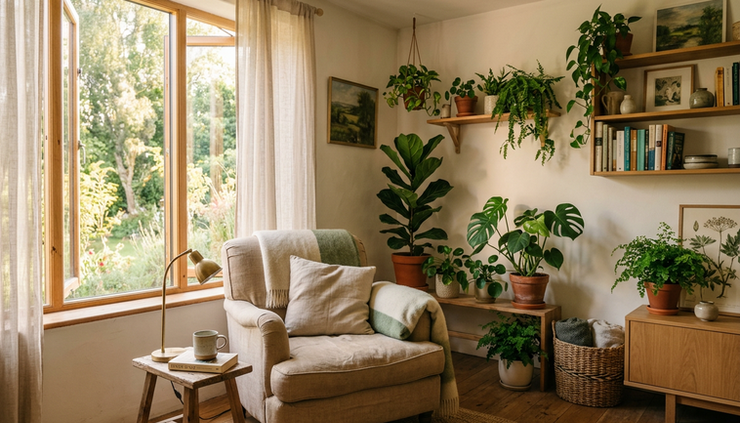
Your mind is prime real estate. Treat it that way.
Lock the door when you need to. Open the windows when it helps. Evict the freeloaders. Keep the tenants that bring light, courage, laughter, and a little peace.
After all, if somebody wants to live in your head, they’d better bring snacks and pay rent.



Comments