Keep Going Through Hell and Find Your Way to the Light

Some days feel less like “character building” and more like the universe handed you a flaming backpack and said, “Good luck, champ.”
Grief, failure, fear, heartbreak, illness, loss, burnout, loneliness, the big ugly stuff does not politely knock. It kicks the door open, tracks mud through the kitchen, and eats the last good snack. When life gets that heavy, stopping can feel tempting. Curling up emotionally, mentally, or literally on the floor becomes a very reasonable-sounding plan.
But Winston Churchill’s well-known line, “If you're going through hell, keep going,” still lands because it’s brutally practical. If you’re in a terrible place, the goal is not to redecorate. The goal is to keep moving until you’re not there anymore.

Hell is a hallway, not an address
When life falls apart, pain can trick you into thinking, “This is it now. This is my whole life.” Pain has a flair for drama. If pain had a résumé, “overreacts in all caps” would be listed under special skills.
But hardship is often more like a hallway than a home. It’s uncomfortable. It echoes. The lighting is terrible. There may be weird carpet. Still, it’s meant to be passed through.
That matters because the way you see suffering changes how you move inside it. If you believe a crisis is permanent, every step feels pointless. If you believe it’s a passage, even a tiny step has meaning.
You don’t have to see the exit to move toward it. You only need enough light for the next few feet.
That might look like:
Getting out of bed when staying under the blanket fortress feels safer
Answering one message instead of handling every relationship at once
Drinking water because your body is not a houseplant, despite current behavior
Taking a walk, even if it’s just to the mailbox and back
Asking for help before pretending you’re “fine” so hard you deserve an Oscar
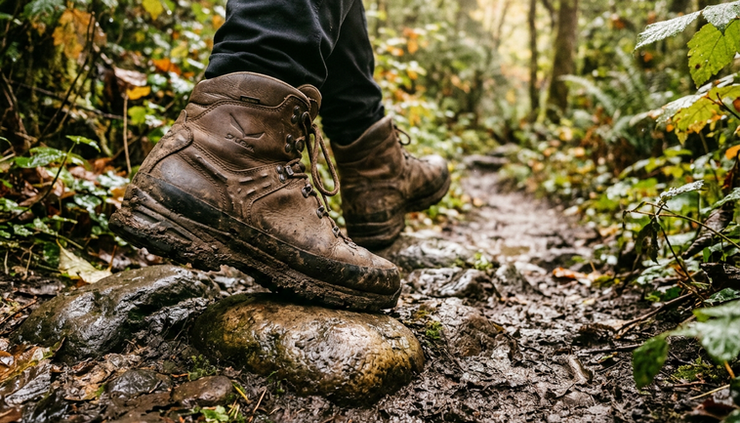
Small movement counts. Especially when everything in you wants to freeze.
Resilience is allowed to look messy
People often picture resilience as someone standing tall in a storm, jaw set, hair blowing heroically, probably with better cheekbones than the rest of us. Real resilience is usually less glamorous.
Sometimes resilience looks like crying in the car, wiping your face, and still walking into the grocery store because you’re out of eggs. Sometimes it looks like sending the text, making the appointment, taking the medicine, saying the truth, or starting over for the third time.
Resilience does not mean you feel fearless. It means fear does not get the only vote.
The brave thing may be small. Tiny, even. Microscopic. Ant-sized. But ants can carry ridiculous weight, so let’s not insult the tiny things.
When you’re going through something brutal, try lowering the bar without dropping it completely. Instead of asking, “How do I fix my whole life by Friday?” try:
“What is the next decent thing I can do?”
“What would make the next hour less awful?”
“Who can I be honest with right now?”
“What problem can wait until tomorrow without the world exploding?”
This is how you keep going through hell without demanding that you become a superhero by lunch.
The fire can refine you, but it does not get to define you
Hardship changes people. That’s true. But change is not the same as ruin.
A painful season can expose strengths you didn’t know were there. Patience. Courage. Humor. Compassion. Boundaries. Grit. The ability to survive an event, a year, or a heartbreak without becoming cold all the way through.
That does not mean we should glamorize suffering. Pain is not a life coach with a clipboard. Some things are simply hard, unfair, and deeply unwanted. Nobody needs to slap glitter on grief and call it “growth.”
Still, when suffering comes, and it does come, we can let it teach without letting it own the whole story.
Think of metal in fire. Heat can weaken it if it stays too long without care. But with pressure, cooling, and shape, it can become stronger. Humans are not metal, obviously. If you are, please contact a museum. But the idea holds: pressure can shape us when we keep returning to what steadies us.
That may be faith, family, therapy, friendship, creativity, service, nature, routine, prayer, exercise, or the sacred healing power of a warm meal and clean socks.

Keep your focus on the next patch of light
One reason hard seasons feel unbearable is that the mind sprints ahead. It starts building disaster castles in the future. Suddenly you’re not just dealing with today’s pain, you’re also starring in a 12-part documentary called Everything Will Definitely Be Terrible Forever.
The way out is not always a grand plan. Often, it’s attention management.
Look for the next patch of light. Not the whole sunrise. Just one patch.
A patch of light can be a person who listens without trying to fix you like a leaky sink. It can be a routine that gives the day shape. It can be a quote on the fridge, a playlist, a walk, a pet doing something weird, or one honest sentence in a journal.
Try building a “keep going” kit for awful days:
A short list of people you can contact
A few grounding actions, like breathing slowly or stepping outside
One comforting meal or drink
A task so small it almost feels silly
A reminder of something you’ve survived before
The point is not to become cheerful on command. You’re a person, not a toaster. The point is to create enough steadiness to take the next step.

Keep going until the scenery changes
There will be seasons when progress feels laughably slow. You may feel like you’re crawling, limping, or scooting forward emotionally like a dog on carpet. Still, forward is forward.
The darkness lies when it says, “Nothing will ever change.” Things do change. Feelings shift. Circumstances move. People heal in uneven, annoying, non-linear ways. Some days are better. Some days are weird. Some days require snacks and silence. That’s allowed.
If you’re in a truly dangerous or overwhelming place, reach for real support. Call someone you trust, contact a counselor, or seek emergency help if you might hurt yourself or someone else. Keeping going does not mean going alone. Even the strongest hikers use maps, water, and occasionally complain about hills.
The heart of it is simple: don’t stop in the fire and call it home.
Take the next step. Then the next one. Make it small if you have to. Make it ugly if you must. Rest when you need to, but don’t surrender your whole future to your hardest chapter.
Hell may be part of the road, but it is not the destination. Keep walking. The light may be closer than it looks.


Comments