Socrates’ Critique of Democracy: Why He Believed It Would Lead to Tyranny
- Aleksandar Tosevski

- Feb 2
- 3 min read
Democracy is often celebrated as the fairest form of government, giving power to the people and ensuring equality. Yet, more than 2,000 years ago, the ancient Greek philosopher Socrates warned that democracy might not be as stable or just as it seems. He believed democracy would eventually collapse under its own contradictions and give way to a worse form of rule: tyranny. His concerns remain relevant today, offering a cautionary perspective on the challenges democracies face.
Socrates’ Critique of Democracy
Socrates argued that democracy’s attempt to satisfy every faction leads to internal conflict and poor decision-making. He saw democracy as a system that would grant every group’s demands, even when those demands conflict or undermine the common good.
He argued that democracy would attempt to satisfy the demands of various factions, even when those demands conflicted:
Groups with economic interests, who might demand wealth redistribution from the rich.
The young, who might challenge the authority and traditions upheld by older generations, often driven by emotion rather than wisdom.
Factions advocating for social reforms, such as gender equality
Foreigners, who would want the same rights as native citizens.
Those with selfish interests, including criminals or demagogues, who might manipulate the system for personal gain.
Socrates believed that democracy’s attempt to meet all these demands would weaken society’s structure and values.
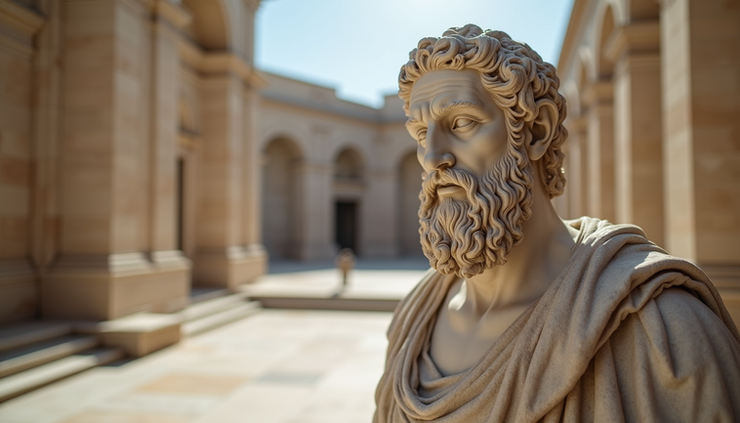
Why Democracy Would Give In to Every Demand
Democracy, by definition, is rule by the majority or the people. Socrates saw this as a problem because the majority might not always act wisely or justly. When the poor outnumber the rich, they might vote to redistribute wealth, creating tensions and destabilizing the system. When young people outnumber elders, they could push for changes that disrespect experience and tradition.
This tendency to satisfy every group’s demands leads to instability. Rather than balancing competing interests, democracy risks allowing the largest or most vocal group to impose its will unchecked.
The Danger of Criminals Gaining Power
Socrates also warned that those who seek power for selfish or harmful reasons could gain control through democratic means. He predicted that when thieves and fraudsters finally win power, they would establish a dictatorship worse than any monarchy or oligarchy.
This happens because once those who seek power for selfish or harmful reasons take control, they no longer need to answer to the people. They can impose harsh rule, suppress freedoms, and exploit the system for their benefit.
Historical Examples That Reflect Socrates’ Warning
History provides examples of democracies struggling with the very issues Socrates warned about:
The fall of the Roman Republic: Wealth inequality and political corruption contributed to civil wars, ultimately leading to the rise of emperors and the end of the Republic.
The Weimar Republic in Germany: Economic hardship and political instability allowed Adolf Hitler to rise to power, undermining democracy and ushering in a brutal dictatorship.
Modern populist movements: Today, some democracies face challenges when leaders exploit divisions and erode democratic institutions for personal or political gain.
These examples show how democracy’s weaknesses can be exploited, leading to outcomes Socrates feared.
Balancing Democracy with Stability
Socrates’ critique does not mean democracy is doomed. Instead, it highlights the need for safeguards:
Strong institutions that protect minority rights and prevent abuses.
Education that encourages critical thinking and civic responsibility.
Checks and balances to limit the power of any one group or individual.
Rule of law that applies equally to all citizens, including leaders.
By addressing these challenges, modern democracies can safeguard against the pitfalls Socrates foresaw.
What We Can Learn Today
Socrates’ warnings remind us to be mindful of the limits and vulnerabilities inherent in democracy. Democracy requires more than just holding elections or counting votes. Democracies require constant care to ensure they serve the common good, protect rights, and prevent power from falling into the wrong hands.
Citizens must stay informed, participate actively, and hold leaders accountable. Only through active engagement can democracy fulfill its promise and avoid descending into chaos or tyranny.


Comments