Why Smart People Fail to Act and How Overthinking Holds Them Back
- Aleksandar Tosevski

- 5 hours ago
- 7 min read
Some of the sharpest people in the room are also the slowest to move.
They can see every angle. They can spot weak assumptions before anyone else. They can imagine the best case, the worst case, the strange case, and the version nobody asked about. Their minds are fast, deep, and careful.
That can be a gift. It can also become a trap.
A deep thinker may spend weeks refining an idea that a less gifted person tests in a day. The careful planner may wait for perfect timing while the imperfect starter gathers feedback, skill, and momentum. Intelligence opens doors, but action changes lives. The bridge between an idea and a result is not more thinking. It is movement.
This is why smart people can struggle with success. Not because they lack talent, discipline, or ambition. They fail to act because their own intelligence keeps giving them reasons to wait.
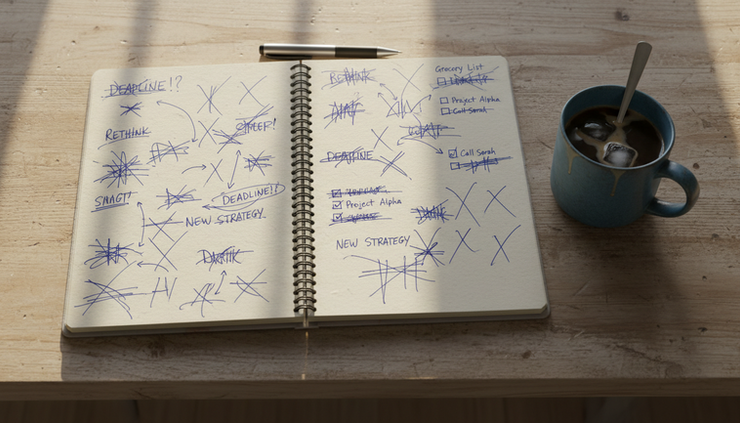
Intelligence can create too many exits
Smart people often do not see one path. They see ten.
That sounds useful, and often it is. Seeing options helps with strategy, risk, and creativity. The problem starts when every option becomes another reason to delay. A simple decision turns into a mental maze.
Should the idea be launched now or later?
Should the first version be simple or polished?
Should feedback come from one trusted person or a larger group?
Should the risk be reduced before trying, or will trying reduce the risk?
The questions may be valid. The danger is that they never end.
A person with less analysis may pick a direction and adjust. A person with more analysis may keep asking for one more layer of certainty. Yet most real decisions do not offer full certainty. They offer partial information, limited time, and consequences that change once action begins.
That is the part many bright people miss. Thinking before acting is useful. Thinking instead of acting is expensive.
A plan can protect against obvious mistakes. It cannot reveal everything. Some answers only appear after the first move.
For example, someone may want to start a podcast. They research microphones, show formats, episode length, audience profiles, editing tools, interview styles, and launch strategies. Six months later, they know more than most beginners.
But they still have no episodes.
Another person records three imperfect episodes with a basic microphone, learns what feels natural, hears what needs fixing, and improves. The second person may not be smarter. They are learning from contact with reality.
Smart people often prefer clean thinking to messy feedback. Yet messy feedback is where growth happens.
Planning feels safe because it avoids judgment
Planning has an emotional reward. It feels productive without requiring exposure.
No one can reject an idea that stays in a private notebook. No one can criticize a draft that never gets shared. No customer can ignore a product that never launches. No performance can fail if it remains imaginary.
That safety can become addictive.
The planning phase lets a person keep their identity intact. They can still be the person with potential. They can still believe the idea would work if they had more time, more money, more skill, or better conditions.
Action changes that. Action produces evidence.
Evidence can be uncomfortable. It may show that the idea needs work. It may reveal a skill gap. It may prove that the first version is average. It may invite silence instead of applause.
For a smart person who is used to being capable, that can feel threatening. They may not fear work. They fear the moment when work becomes visible.
This is one reason overthinking becomes so costly. Every decision requires one more round of approval from the self. The person becomes both the builder and the committee. They prepare, revise, doubt, defend, and reject their own ideas before anyone else gets the chance.
That inner committee sounds responsible. Often, it is just fear wearing a thoughtful costume.

The mind says:
Wait until the idea is clearer.
Wait until the risk is smaller.
Wait until the timing improves.
Wait until confidence arrives.
Wait until no one can criticize it.
But confidence rarely arrives before action. More often, confidence is the result of action repeated enough times to become familiar.
A musician becomes less afraid of performing by performing. A writer becomes less afraid of publishing by publishing. A founder becomes less afraid of selling by selling. The fear shrinks after repeated contact, not before it.
Smart people can mistake overthinking for depth
A strong mind enjoys complexity. It can be satisfying to build frameworks, compare theories, and refine a plan until it feels elegant.
But elegant thinking does not always create useful progress.
Some problems need depth. Others need a first attempt. The challenge is knowing the difference.
If a surgeon is preparing for an operation, careful planning matters. If an engineer is building a bridge, precision matters. If a lawyer is reviewing a contract, details matter.
But many personal and creative decisions do not need that level of certainty. Starting a newsletter, applying for a role, asking for feedback, learning a skill, launching a small service, or making a difficult phone call rarely requires months of thought. It requires a reasonable next step.
A smart person may treat every decision like a high-stakes puzzle. That makes ordinary movement feel heavier than it is.
Not every move defines the rest of a life. Some moves are just information.
Sending the email gives information.
Making the offer gives information.
Trying the class gives information.
Posting the first article gives information.
Having the conversation gives information.
The goal is not to remove all uncertainty. The goal is to create better uncertainty. Before action, the unknowns are abstract. After action, the unknowns become specific.
That shift matters.
“Will people care?” becomes “Three people replied, and two asked the same question.”
“Can I do this?” becomes “I can do the first part, but I need help with the second.”
“Is this worth pursuing?” becomes “I tried it for 30 days, and here is what happened.”
Thinking produces guesses. Action produces data.

There is a simple rule that helps: if the cost of a small test is low, test sooner.
A small test might be:
Writing the first page instead of outlining the whole book.
Making one sales call instead of perfecting the offer.
Taking one class instead of researching the entire field.
Building a rough sample instead of imagining the finished product.
Asking one honest question instead of rehearsing the whole conversation.
The first test does not need to be grand. It needs to be real.
Perfection can hide inside high standards
Many smart people say they have high standards. Often, they do. High standards can produce excellent work. They can also block the first version of any work from existing.
The first version is rarely impressive. That is true for almost everyone.
The first draft is clumsy.
The first product is limited.
The first speech feels awkward.
The first workout is humbling.
The first negotiation is uncomfortable.
High standards become harmful when they demand final-version quality from first-version effort. That demand sounds noble, but it breaks the learning process. Nobody improves a draft that was never written. Nobody improves a product that was never built. Nobody improves a skill they refuse to practice badly.
A better standard is not “Make it perfect before anyone sees it.” A better standard is “Make it useful enough to learn from.”
That difference changes everything.
A person can still care about quality. They can still revise, improve, and prepare. But they stop using quality as a reason to avoid reality.
One practical way to do this is to separate creation from review.
When creating, produce without judging too soon. When reviewing, improve with care. Mixing both at the same time creates friction. The creator takes one step forward, then the critic pulls everything apart.
For writing, this means drafting before editing.
For fitness, it means moving before measuring.
For entrepreneurship, it means testing before scaling.
For learning, it means practicing before comparing.
The smart mind wants to evaluate. Give it a place to evaluate, but do not let it interrupt every beginning.
Action turns intelligence into power
Intelligence by itself is potential energy. It can imagine, connect, predict, and solve. But without action, it stays stored.
Action converts that potential into experience.
Experience changes the mind in ways thinking alone cannot. It builds judgment. It creates memory. It reveals patterns. It teaches timing. It shows what matters and what only seemed important from a distance.
This is why less brilliant but more consistent people often pass highly gifted people. They are not winning because they know more. They are winning because they are in motion long enough to learn.
They send the application.
They ask the question.
They show the work.
They make the call.
They recover from the awkward attempt.
They improve the second version.
They build a life out of tries.
That does not mean reckless action is better than thought. The answer is not to stop thinking. The answer is to put thinking in its proper place.
Thinking should guide action, not replace it.
Use intelligence to choose a direction. Use action to discover the terrain. Then use intelligence again to adjust. That loop is powerful because it stays connected to reality.
A useful rhythm looks like this:
Think enough to choose the next step.
Act before the plan becomes bloated.
Observe what happens.
Adjust based on evidence.
Repeat.
The loop looks simple because it is. Simple does not mean easy. The hard part is tolerating the discomfort of early movement.

The takeaway is to lower the gate, not the standard
Smart people do not need to become careless. They do not need to ignore risk or pretend every idea is good. They need to lower the gate between thought and action.
A gate is too high when every choice needs total confidence.
A gate is too high when preparation never becomes practice.
A gate is too high when private potential feels safer than public effort.
The goal is not to act on every impulse. The goal is to stop treating every next step like a final verdict on your ability.
Pick one decision that has been circling in your mind. Make the next move smaller than your fear wants it to be. Send one message. Draft one page. Build one rough version. Ask one person. Try one session. Give yourself real evidence.
Brilliance can open the door, but it cannot walk through it for you. At some point, the opportunity in front of you needs less approval and more movement.



Comments