Balanced Plate Rule: The Easy Way to Build Healthy Meals

Some meals leave you full for hours. Others have you opening the pantry 45 minutes later, wondering what just happened.
A balanced plate helps fix that without turning dinner into a math problem. Instead of counting every bite or following a strict meal plan, you use your plate as a simple guide: half vegetables or salad, one-quarter protein, and one-quarter healthy carbs and fats.
That’s the whole idea. It’s visual, flexible, and easy to repeat whether you’re cooking at home, packing lunch, or putting together something quick after a long day.
This guide is for general information only and isn’t medical advice. If you have a health condition, food allergy, or specific nutrition needs, it’s always smart to check with a qualified health professional.
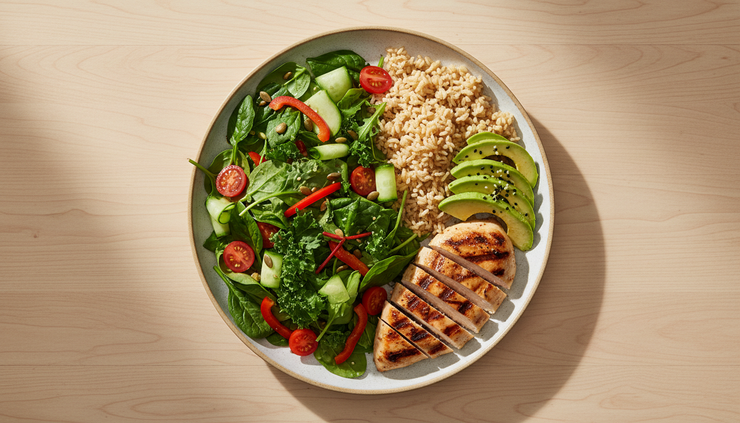
What the balanced plate rule looks like
The Balanced Plate Rule is a simple way to plan meals without weighing everything or memorizing nutrition charts.
Picture a regular dinner plate divided into three parts:
Half the plate
Vegetables or salad
One-quarter of the plate
Protein
One-quarter of the plate
Healthy carbs and fats
The exact foods can change from meal to meal. The structure stays the same.
That’s why this approach works so well for busy weeks. You don’t need a brand-new recipe every night. You can mix and match what you already like. One day it might be salmon, quinoa, and roasted broccoli. Another day it might be eggs, potatoes, spinach, and tomatoes. The pattern stays familiar, while the food still feels varied.
It also keeps meals from leaning too far in one direction. A plate of only pasta may taste great, but it might not keep you satisfied for long. A plate of only chicken and lettuce can feel too light. A balanced plate gives your body a mix of fiber, protein, carbs, fats, vitamins, and minerals in one meal.
The best part is that it’s not rigid. You don’t need perfect lines on the plate. A salad bowl, soup, wrap, or grain bowl can still follow the same idea. Just think in portions, not perfection.
Why this method works so well
A lot of healthy eating advice gets complicated fast. The balanced plate keeps things practical. It doesn’t ask you to change your whole life overnight. It gives you a clear starting point every time you eat.
It makes portion control easier
Portion control can feel frustrating when it turns into measuring cups, food scales, and tracking apps. Those tools can be useful for some people, but they’re not always realistic for everyday meals.
The plate method gives you a visual shortcut. If half your plate is vegetables and the other half is split between protein and carbs or fats, your meal is already more balanced than many typical plates.
This helps with food tracking because you can quickly see what’s missing. Too little protein? Add eggs, tofu, fish, chicken, or beans. No vegetables? Toss in spinach, cucumber, tomatoes, or peppers. Too many starchy foods crowding the plate? Shift some space back toward salad or non-starchy vegetables.
It’s simple enough to use repeatedly, which matters more than getting one meal perfect.
It adds more vitamins and minerals
Vegetables bring a lot to the plate. They’re rich in vitamins, minerals, fiber, and plant compounds that support overall health. They also add color, crunch, and volume, which makes meals feel bigger and more satisfying.
Leafy greens like spinach and lettuce can make a meal feel fresh. Broccoli adds fiber and texture. Tomatoes, cucumbers, and peppers bring brightness and water-rich crunch.
When half your plate comes from vegetables or salad, you naturally eat more nutrient-dense foods without needing to overthink it.
It supports steady energy
Protein and carbs work well together. Protein helps with fullness and supports muscle maintenance. Carbs give your body an accessible source of energy, especially when they come from whole grains, oats, potatoes, or other minimally processed sources.
Healthy fats add flavor and help meals feel satisfying. Think olive oil on salad, avocado with eggs, or nuts sprinkled over a grain bowl.
When you combine these pieces, energy tends to feel more steady. You’re less likely to get that quick spike and crash that can happen when a meal is mostly refined carbs or sugar.

What to put in each part of the plate
The easiest way to use this rule is to set up a few go-to options for each section. That way, you’re not starting from scratch every time.
Fill half your plate with salad or vegetables
This is the anchor of the meal. Aim for a mix of colors, textures, and flavors when you can.
Good options include:
Lettuce
Spinach
Broccoli
Tomatoes
Cucumbers
Peppers
You can serve them raw, steamed, sautéed, roasted, or tossed into a salad. The cooking method doesn’t need to be fancy.
A few simple combinations work especially well:
Spinach, cucumbers, tomatoes, and peppers with olive oil and vinegar
Roasted broccoli with garlic and a squeeze of lemon
Lettuce, tomatoes, cucumbers, and grilled chicken
Sautéed peppers and spinach with eggs
Broccoli and tomatoes added to a rice bowl
If vegetables feel boring, season them more. Salt, pepper, garlic, lemon juice, vinegar, herbs, chili flakes, and a small amount of olive oil can make a huge difference.
Use one-quarter of the plate for protein
Protein helps make the meal feel complete. It’s especially helpful if you’re trying to stay full between meals or support an active routine.
Strong protein choices include:
Chicken
Turkey
Fish
Eggs
Tofu
Legumes, such as beans, lentils, and chickpeas
You don’t have to eat the same protein every day. In fact, variety makes this style of eating easier to stick with. Chicken and turkey are easy meal-prep choices. Fish can be quick to cook. Eggs are useful for breakfast, lunch, or dinner. Tofu absorbs flavor well. Legumes are budget-friendly and bring both protein and fiber.
A helpful rule is to choose a protein you actually enjoy, then build around it. If you’re excited about the protein, the vegetables and carbs feel easier to add.
Use one-quarter of the plate for healthy carbs and fats
This part often gets misunderstood. Carbs aren’t the enemy, and fats aren’t something to fear. The goal is to choose options that give your meal staying power.
Good carb choices include:
Whole grain rice
Quinoa
Oats
Boiled potatoes
Baked potatoes
Good fat choices include:
Olive oil
Avocado
Nuts
Because fats are calorie-dense, a little usually goes a long way. You might use olive oil as part of a dressing, add a few avocado slices, or sprinkle nuts over a salad. The carbs can take the main space in that quarter of the plate, while fats act more like a satisfying add-on.
For example, a meal could include grilled turkey, roasted vegetables, and quinoa with olive oil. Another could be eggs, spinach, tomatoes, and a baked potato with avocado. Both fit the same pattern.

How to build a balanced plate in real life
The plate rule sounds simple, but real life brings leftovers, takeout, picky moods, and rushed meals. That’s fine. This strategy is meant to bend.
Start with what you already have
Open the fridge and look for one item from each group.
Maybe you have:
Lettuce, peppers, and cucumbers
Leftover chicken
Cooked rice
Olive oil dressing
That’s a balanced plate.
Or maybe you have:
Spinach and tomatoes
Eggs
Boiled potatoes
A few slices of avocado
That works too.
You don’t need a special meal plan. You need a repeatable structure.
Use bowls when plates don’t fit the meal
Many meals don’t sit neatly on a plate, especially soups, stews, and bowls. The same idea still applies.
For a grain bowl, fill the base with plenty of vegetables, add tofu or chicken, then include quinoa or whole grain rice with a small amount of olive oil or avocado.
For a soup, think about what’s inside. Does it have vegetables? Does it include protein, like legumes, turkey, chicken, or tofu? Does it have a healthy carb, like potatoes, oats in a savory porridge, rice, or another whole grain? If the answer is yes, you’re close.
Make quick meals feel complete
The balanced plate can turn “random food” into a real meal.
Try these easy combinations:
Scrambled eggs with spinach and tomatoes
Turkey lettuce bowl with cucumbers and peppers
Tofu with broccoli and peppers
Fish with salad greens and tomatoes
Add boiled potatoes and avocado
Add quinoa and olive oil dressing
Add whole grain rice and a few nuts
Add baked potato and olive oil
These meals don’t need to be complicated. They just need the main pieces.
Common mistakes that make meals less balanced
The balanced plate is forgiving, but a few habits can make it less helpful.
One common mistake is making vegetables a tiny garnish. A few lettuce leaves on the side won’t give you the same benefit as filling half the plate. Aim for real volume.
Another mistake is skipping protein. A plate of salad and rice may look healthy, but it might not keep you full. Add eggs, tofu, legumes, fish, chicken, or turkey to give the meal more staying power.
Some people also avoid carbs completely, then feel tired or snacky later. Healthy carbs can be part of a balanced meal. Whole grain rice, quinoa, oats, and potatoes all have a place.
The last mistake is overdoing fats without noticing. Olive oil, avocado, and nuts are nutritious, but portions still matter. Use them to add flavor and satisfaction, not to take over the plate.

Make the balanced plate easy to repeat
The best healthy eating strategy is the one you can actually keep doing. The plate rule works because it removes a lot of guesswork.
A simple weekly setup can help:
Wash and chop a few vegetables
Cook one or two proteins
Make a batch of whole grain rice, quinoa, or potatoes
Keep olive oil, avocado, or nuts ready for healthy fats
Mix and match meals as the week goes on
You can also adjust the plate based on your day. If you’re more active, you may want a slightly larger carb portion. If you’re not very hungry, you might keep the meal lighter but still include each part. The basic structure gives you a starting point, not a strict rulebook.
If weight management is one of your goals, meal timing may matter too, but it’s not the same for everyone. For a closer look at that piece, read this guide on whether meal schedules for weight management are personal choice or something more structured.
The takeaway
The balanced plate isn’t flashy, and that’s exactly why it works. It helps you build meals that are filling, colorful, and easier to track without turning food into a full-time project.
Start with the simple formula: half vegetables or salad, one-quarter protein, and one-quarter healthy carbs and fats. Choose foods you like from each section, keep a few staples ready, and repeat the pattern often.
You don’t need a perfect meal. You just need a plate that gives your body more of what it needs, one meal at a time.


Comments