Slow Down to Thrive Good Things Take Time in a Fast Paced World

Some days feel like a race where nobody told you the finish line moved three blocks away, uphill, in the rain. You wake up, check the time, hurry through breakfast, answer messages, juggle tasks, remember something you forgot, and somehow end the day tired but unsure what actually got done.
That is the strange trick of constant rushing. It feels productive, but it often leaves life looking blurry around the edges.
There is a German saying, “Gut Ding will Weile haben,” often translated as “Good things take time.” It sounds like something a wise grandparent would say while slowly stirring soup and being annoyingly right. But it has real value now. Maybe more than ever.
Slowing down does not mean giving up, becoming lazy, or moving through life like a sleepy garden snail wearing slippers. It means making room for quality, health, attention, and peace. It means choosing a pace that lets you notice your life while you are living it.

“Good things take time” still belongs in modern life
The German saying “Good things take time” reminds us that quality often grows slowly. Bread needs time to rise. A friendship needs time to deepen. A skill needs practice. A decent pot of soup needs more than angry speed and wishful thinking.
Rushing can be useful in real emergencies. If the smoke alarm goes off, please do not pause to reflect on your deepest values while casually buttering toast. Move.
But most of daily life is not an emergency. We just treat it like one.
A rushed morning. A rushed meal. A rushed conversation. A rushed decision. A rushed bedtime. Stack enough of those together and life starts to feel like a suitcase packed by sitting on it. Technically closed, but under pressure.
“Good things take time” is not a call to do less for no reason. It is a call to do things with enough attention that they can become good.
That might mean:
Giving yourself enough time to complete a task without panic
Letting a conversation breathe instead of mentally sprinting ahead
Building habits in small steps instead of trying to become a whole new person by Tuesday
Resting before the body files a loud complaint with management
The saying matters because it challenges a popular myth: faster is always better. Faster food, faster replies, faster results, faster everything. But faster can also mean thinner, messier, more stressful, and less satisfying.
A tomato ripened in the sun tastes different from one forced along too quickly. People are not tomatoes, of course, although some of us do turn red under pressure. Still, the point stands. Growth needs time.
Rushing narrows what you can see
When you rush, your attention tightens. The brain focuses on what feels urgent, often at the expense of what is meaningful. This is useful if you are crossing a busy street. It is less useful if you are trying to enjoy dinner, solve a complex problem, or listen to someone you love.
Rushing creates tunnel vision.
You may notice only the next deadline, the next notification, the next chore, the next thing that needs fixing. Meanwhile, quieter things disappear from view:
The taste of your food
The tone in someone’s voice
The small win you had earlier
The fact that your shoulders are basically living next to your ears
The question, “Do I even need to do this right now?”
This narrowed perception can lead to poor choices. Not because anyone suddenly becomes incapable, but because speed limits awareness. When the mind is racing, it has less space to compare options, notice details, or ask, “Is this worth my energy?”
It is the difference between reading a map and running through a maze while holding the map upside down.
Slowing down widens perception. It gives the mind a chance to collect more information. You notice where time is actually going. You see which tasks matter and which ones merely make noise. You catch the early signs of stress before they turn into the emotional equivalent of a marching band in your kitchen.
A slower pace also helps with presence. That word can sound fancy, like something embroidered on a pillow, but it is simple. Presence means being where you are. Washing one dish and just washing one dish. Taking one walk and actually seeing the trees. Listening without planning a reply like you are preparing for a courtroom drama.
Small moments become richer when they are not crushed under the weight of hurry.
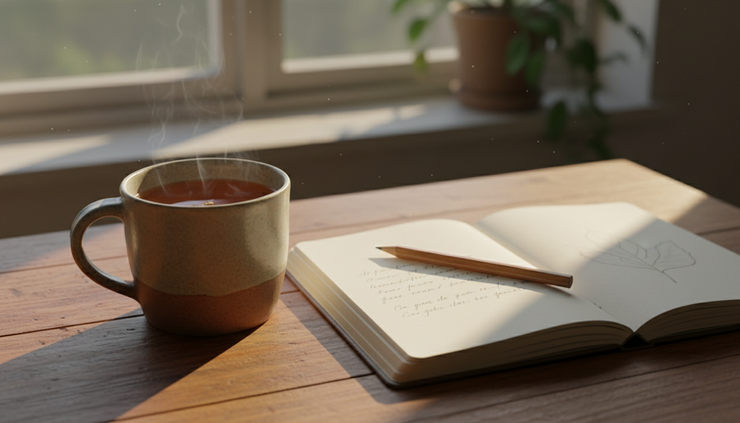
Speed raises stress and steals sleep
The body is not fooled by constant hurry. You can tell yourself, “I’m fine, I’m fine, I’m fine,” but the nervous system may be in the corner wearing a tiny helmet.
Rushing often keeps the body in a state of alert. Heart rate may increase. Muscles tighten. Breathing becomes shallow. Thoughts speed up. Even after the busy part is over, the body may struggle to shift back into rest.
This matters because chronic stress can affect mood, focus, patience, digestion, and sleep. This is general wellness information, not medical advice, but research broadly suggests that ongoing stress and poor sleep can feed each other. Stress makes it harder to sleep well, and poor sleep makes stress harder to handle. A truly rude little loop.
Quality sleep needs a runway. The mind and body need time to descend. If the day ends with frantic chores, intense problem-solving, or a mental replay of every awkward sentence ever spoken since middle school, sleep may not arrive easily.
Rushing disrupts sleep in a few common ways:
The mind stays stuck in planning mode
The body remains tense
Bedtime gets pushed later by “just one more thing”
Relaxation feels unfamiliar, almost suspicious
Worry expands because there is finally quiet space for it
A slower evening routine can help signal safety and rest. It does not need to be elaborate. No need to light 47 candles and speak only in whispers. Simple is better.
Try choosing a few calming cues:
Lower the lights
Put tomorrow’s essentials in one place
Write down lingering tasks
Stretch gently
Read something soothing
Give yourself a consistent wind-down window
The goal is not perfect sleep every night. Life interferes. Pets make weird noises. Neighbors discover furniture rearrangement at 11:30 p.m. The goal is to stop treating bedtime like a random crash landing.
When you slow down before sleep, you give your body a better chance to recover. And recovery is not optional. It is maintenance. Even machines need downtime, and they do not have feelings about laundry.
Realistic plans protect your well-being
A plan can be a bridge or a trap. A realistic plan helps you move through the day with more steadiness. An unrealistic plan becomes a tiny tyrant with checkboxes.
Many people plan as if they have unlimited energy, zero interruptions, and the focus of a laser-guided owl. Then life happens. A task takes longer than expected. A message needs an answer. A family need appears. Energy drops. Suddenly the plan becomes proof of failure.
That is not planning. That is fiction with bullet points.
A well-being-first plan starts with reality. It asks what can actually fit into the day without sacrificing health, sleep, meals, movement, and basic human kindness.
Try this simple approach:
Choose the day’s true priorities
Pick one to three things that matter most. Not twelve. Twelve priorities are not priorities, they are a parade.
Estimate time generously
If something usually takes 30 minutes, consider planning for 45. This creates breathing room and reduces the panic of being “behind” all day.
Add breaks before you need them
Do not wait until your brain starts making dial-up internet noises. Schedule pauses as part of the plan.
Leave space for the unexpected
A packed calendar looks efficient, but it behaves like a glass filled to the rim. One bump and everything spills.
End the day with a soft landing
Build in a stopping point. The work of being alive does not need to continue until your face hits the pillow.
A realistic plan respects energy. It makes room for meals, rest, movement, and connection. That is not self-indulgent. That is how humans stay functional without turning into cranky houseplants.

Breaks are not wasted time
Breaks have a branding problem. Too many people think of them as something you earn only after pushing hard enough. But regular breaks can support mental health, focus, and emotional balance.
Think of breaks like punctuation. Without them, the day becomes one long sentence that keeps going and going until nobody remembers the point and everyone needs a snack.
A useful break does not have to be long. Five minutes can help. Ten minutes can help more. What matters is that the break actually interrupts the stress cycle.
Strong break options include:
Walking outside for a few minutes
Drinking water away from screens
Stretching the neck, shoulders, and back
Taking slow breaths
Looking out a window
Making tea or a simple snack
Sitting quietly without trying to be productive
A poor break is one that keeps the brain in the same frantic mode. If a pause leaves you more tense, it may not be a pause. It may be stress wearing sunglasses.
Regular breaks also create natural checkpoints. During a pause, ask:
What am I feeling right now?
What does my body need?
Is my current task still the right next step?
Am I rushing because it is necessary, or because rushing has become a habit?
These tiny check-ins can prevent a day from running away with your peace in its sneaky little backpack.
Ask what truly matters each day
Not everything deserves the same urgency. A meaningful life requires sorting. Some tasks are genuinely important. Some are helpful but not urgent. Some are just noise with excellent public relations.
A daily reflection can make this clearer.
Try asking these questions in the morning, during lunch, or before the evening begins:
What matters most today?
What would make today feel well spent?
What can wait without causing real harm?
What am I doing only because I feel pressured?
Where do I need more peace, not more speed?
These questions are simple, but they cut through the fog. They remind you that the point is not to complete the most tasks. The point is to live with intention.
This is where postponing less important tasks becomes powerful. Postponing is not the same as neglecting. It is choosing. It says, “This can wait because something more important needs my attention.”
Maybe the less important task is reorganizing a drawer, replying instantly to a non-urgent message, or finishing a chore that can safely wait until tomorrow. Meanwhile, the more important thing might be sleep, a thoughtful conversation, a walk, a healthy meal, or doing one piece of work well instead of doing five things badly.
Inner peace grows when actions match values. If health matters, the plan must include rest. If relationships matter, the day needs attention for people, not just tasks. If quality matters, rushing everything will not get you there.
A slower life is not an empty life. It is a life with room to notice what deserves care.
Slowing down may feel uncomfortable at first. If your nervous system is used to constant speed, rest can feel like forgetting something. But with practice, calm becomes less strange. The mind learns that not every pause is a problem.

A slower pace can change the shape of a day
Slowing down is not about moving through life at the speed of cold syrup. It is about matching your pace to what matters.
Some moments require quick action. Many do not. The skill is learning the difference.
A good day does not have to be perfect, polished, or wildly productive. It can be a day where you:
Notice when you are rushing
Take one real break
Protect one important priority
Postpone one low-value task
Eat without multitasking once
End the night with a little more calm
That counts. Small shifts matter because they teach the body and mind a new rhythm.
The German saying “Good things take time” is not outdated wisdom from a slower century. It is a reminder that humans still need patience, rest, and attention. We still build good lives one choice at a time. We still need space to think, sleep, care, and breathe.
If this topic connects with the bigger idea of honoring your needs, boundaries, and peace, read how learning to respect yourself can transform how others treat you.
Today, choose one thing to slow down. Not everything. Just one thing.
Take the longer breath. Leave the non-urgent task for later. Make the plan kinder. Step outside for five minutes. Ask what really matters before the day decides for you.
Good things take time. So do good days, good sleep, good choices, and a good relationship with yourself. Give them the time they deserve.


Comments