Small Steps Matter More Than Perfect Plans

“Starting Monday” has ruined more dreams than failure ever did.
Monday is where fitness plans go to nap. It is where books wait politely on nightstands. It is where business ideas sit in a mental waiting room, flipping an old magazine, wondering when someone will finally call their name.
We tell ourselves we need the right equipment, the perfect mood, a better schedule, a cleaner kitchen, a new notebook, a sign from the universe, and maybe a dramatic movie soundtrack. Then weeks pass. Then months. Then, somehow, the “quick delay” has grown a beard and started paying taxes.
The uncomfortable truth is simple: the path to anything big is usually not glamorous, short, or ideal. It is mostly made of small, slightly boring steps that feel too unimpressive to count.
But they do count.
Ten minutes of training beats sitting still. One page read beats no reading. One imperfect step beats the perfect plan that lives rent-free in your head and contributes nothing to the household.
Small steps matter because they turn intention into movement. And movement, even tiny movement, changes the whole story.

Waiting for the perfect moment is a very fancy trap
Perfect timing sounds responsible. It feels mature. It wears glasses and says things like, “Let’s circle back when conditions improve.”
But most of the time, “I’ll wait until the perfect moment” is just procrastination wearing a tiny mustache and pretending to be wisdom.
The perfect moment usually requires all of these things to happen at once:
Enough energy
Enough time
Enough confidence
Enough money
A clear plan
Zero distractions
A mysterious glow around the calendar date
Good luck. That list has the same energy as waiting for a unicorn to deliver your gym shoes.
Life rarely clears the runway for a smooth takeoff. The laundry still exists. Your inbox still acts like it was raised by wolves. The car makes a weird noise. Someone eats the leftovers you were emotionally depending on.
If the plan only works when life is calm, the plan probably needs a little more real life in it.
A better question than “Is now perfect?” is:
What is the smallest useful thing I can do with the time, energy, and resources I actually have?
That question cuts through the fog. It does not ask for greatness. It asks for motion.
And motion is where progress begins.
Big goals are built from tiny votes
Every small action is a vote for the kind of person you are becoming.
Read one page, and you cast a vote for being a reader. Walk for 10 minutes, and you cast a vote for being someone who moves. Send one email, sketch one idea, clean one drawer, practice one chord, save five dollars, write one paragraph. Tiny votes.
No single vote feels historic. You probably will not hear trumpets after stretching for eight minutes in sweatpants that have seen better centuries.
But small actions repeat. Repeated actions form patterns. Patterns become identity. Identity changes what feels normal.
That is the real magic. Not fireworks. Not overnight reinvention. Just the quiet shift from “I should do this someday” to “This is what I do.”
Perfection demands a grand entrance. Progress slips in through the side door carrying a grocery bag.
The first step is not supposed to impress anyone
This is where people get stuck. The first step feels too small to respect.
“I only walked around the block.”
“I only wrote half a page.”
“I only practiced for 10 minutes.”
“I only cleaned one shelf.”
Only? That word is sneaky. It takes a real action and makes it sound like a coupon nobody wants.
But “only” is often where consistency is born. A small step lowers the emotional cost of starting. It gives your brain proof that the task is survivable. It turns the giant monster called “my goal” into something less terrifying, like a raccoon wearing a cape.
Small is not the enemy. Small is the doorway.
Motivation is unreliable, so stop making it the boss
Motivation is lovely when it shows up. It kicks open the door, throws confetti, and says, “Let’s change our life!”
Then it disappears for six weeks because it got distracted by snacks.
If motivation is your entire strategy, your progress will be as stable as a folding chair on a trampoline.
Small steps work because they do not require a heroic emotional state. You do not need to feel inspired to do two push-ups, read one page, or open the document. You just need to start.
And often, starting creates the feeling you were waiting for.
Not always, of course. Sometimes the workout stays annoying. Sometimes writing still feels like teaching a squirrel to do tax forms. But once you begin, the task becomes real. The resistance loses some of its mystery.
Before you start, the task is a giant shadow on the wall. After you start, it becomes a thing with edges.
You can handle things with edges.

Imperfect action teaches what planning cannot
Plans are useful. Please make plans. A plan can save time, reduce confusion, and prevent “I guess I’ll just panic creatively” from becoming your main operating system.
But planning has a limit.
At some point, the plan needs contact with the real world. That is where you learn what actually works.
You can plan the perfect fitness routine, then discover your knees have submitted a formal complaint. You can plan to write every night, then learn your brain turns into pudding after 9:00 p.m. You can plan to cook healthy meals, then realize your relationship with chopping onions is legally complicated.
Imperfect action gives you feedback. Feedback helps you adjust. Adjustment makes the plan better.
The perfect plan in your head cannot teach you much because it has never touched reality. It is still wrapped in bubble wrap.
A messy first attempt gives you information:
What felt harder than expected
What felt easier than expected
What time of day worked
What got in the way
What you are willing to repeat tomorrow
That last one matters most. A plan you can repeat beats a plan that looks impressive but collapses after two days like a lawn chair in a windstorm.
The small step removes the drama
Big goals attract drama.
“I need to change my whole life.”
“I need to finally get serious.”
“I need to become a completely different person by Thursday.”
Relax, Captain Transformation. Maybe just fill the water bottle.
Small steps reduce the emotional volume. They make progress feel normal instead of theatrical.
That matters because drama burns energy. If every action feels like a personal referendum on your worth, you will get tired fast. Nobody wants to live inside a sports movie montage all day. Even the montage people need lunch.
Small steps say, “No big production today. Just the next little thing.”
That approach is gentle, but it is not weak. It is practical. It respects the fact that you have a life, a nervous system, and possibly a laundry basket that keeps respawning like a video game villain.
Small does not mean random
There is a difference between small steps and scattered steps.
A small step should point in the direction you want to go. It can be tiny, but it should be connected to the larger goal.
If the goal is to get healthier, a small step might be:
Walk for 10 minutes after dinner
Add a glass of water in the morning
Stretch while the coffee brews
Prep one simple snack
If the goal is to read more, a small step might be:
Read one page before checking your phone
Keep a book near the couch
Replace 10 minutes of scrolling with 10 minutes of reading
Listen to an audiobook while doing chores
If the goal is to start a project, a small step might be:
Write the rough idea in one paragraph
Make a list of supplies
Spend 15 minutes researching one question
Ask one person for feedback
The step can be small. The direction should be clear.
Your brain trusts proof more than promises
Promises feel good at first.
“I’m going to work out five days a week.”
“I’m going to finish the book this month.”
“I’m going to build that thing.”
Nice. Very inspiring. Your brain claps politely.
But after enough broken promises, your brain starts acting like a skeptical friend at brunch. “Sure, Jan. We’ve heard this before.”
Small completed actions rebuild trust.
When you tell yourself, “I will do 10 minutes,” and then you do 10 minutes, something shifts. You become more believable to yourself. That matters more than most people realize.
Confidence is not only built by thinking positive thoughts in the mirror, although if that works for you, please continue your bathroom pep rally. Confidence grows when your actions give you evidence.
Evidence beats hype.
You do not need to believe you can transform your whole life today. You just need to prove that you can keep one small promise.
Then do it again.

The compound effect is not flashy, but it is undefeated
Small actions are easy to underestimate because their results do not arrive with a parade.
One workout rarely changes your body. One page rarely changes your mind. One savings deposit rarely changes your finances. One music practice rarely makes you sound like a concert legend instead of a confused goose.
But repeated small actions pile up.
A page a day becomes a finished book. Ten minutes of movement becomes weeks of activity. One paragraph a day becomes a draft. Five minutes of tidying becomes a home that feels less chaotic.
The early stage often looks like nothing. This is where patience gets tested. You keep showing up, and the results seem to be hiding behind a curtain eating chips.
Then one day, you notice the change. You recover faster. You understand more. The project has shape. The habit feels easier. The room stays cleaner. Your future self sends a tiny thank-you note, probably in very neat handwriting.
Small steps matter more than perfect plans because they create something plans cannot create by themselves: evidence, rhythm, and momentum.
Make the step so easy it feels almost silly
If you keep avoiding the task, shrink it.
Not forever. Just to start.
Make it so easy your brain has trouble objecting.
Do one push-up
Read one paragraph
Write one sentence
Put on the walking shoes
Open the file
Wash one plate
Practice for five minutes
This may feel ridiculous. Good. Ridiculous is useful if it gets you moving.
The trick is that once you start, you might continue. But you do not have to. The win is keeping the promise. If you said one paragraph and you read one paragraph, you succeeded. Anything beyond that is extra fries at the bottom of the bag.
Watch out for the equipment excuse
The equipment excuse is one of procrastination’s favorite costumes.
“I’ll start working out when I get better shoes.”
“I’ll start cooking when I buy the perfect pans.”
“I’ll start writing when I find the right app.”
“I’ll start filming when I have better lighting.”
Sometimes equipment matters. If you need safety gear, proper shoes, or a tool that makes the task possible, get it. Nobody is suggesting you train for a bike race on a unicycle you found behind a shed.
But often, the gear becomes a delay tactic.
The notebook does not write the chapter. The yoga mat does not stretch the hamstrings. The expensive blender does not automatically make you a person who drinks green smoothies, though it will sit on the counter looking judgmental.
Start with what you have when you can. Upgrade later from experience, not fantasy.
Experience tells you what you actually need. Fantasy tells you that buying a nicer water bottle will finally unlock your personality. Be careful with that one.
Build a tiny starting ritual
Starting is often the hardest part, so make the beginning obvious.
A tiny ritual removes the negotiation. It tells your brain, “This is what we do now.” No committee meeting required.
Try something simple:
Put your walking shoes by the door
Place the book on your pillow
Fill the water bottle before bed
Set a timer for 10 minutes
Keep the guitar on a stand
Open tomorrow’s document before you stop working today
Lay out workout clothes where you can see them
The goal is to reduce friction. Make the first move visible and easy.
A good starting ritual is not dramatic. It is almost boring. That is the point. Boring repeats well.
Drama is exciting once. Boring can change your life.
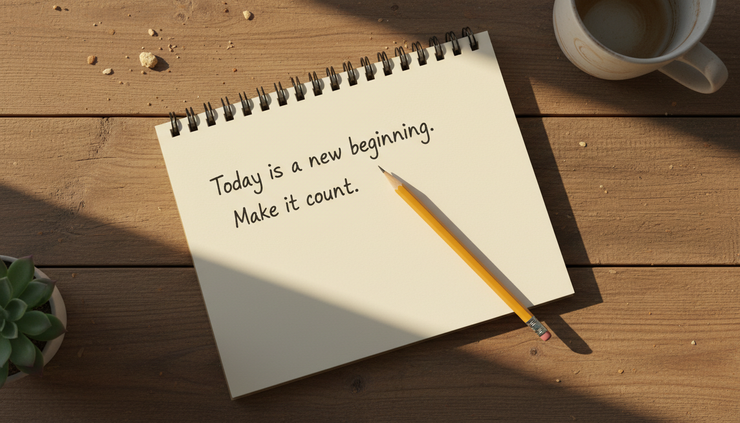
The goal is not to stay small forever
Small steps are not an excuse to avoid effort. They are the way into effort.
At some point, 10 minutes may become 20. One page may become a chapter. One paragraph may become a full writing session. The tiny habit grows because you built a base it can stand on.
This is where people sometimes get the message wrong. They think small steps mean tiny ambition. Not even close.
Small steps can serve huge ambition. They just do not demand that every day feel like a championship game.
Think of it like starting a campfire. You do not begin by throwing a giant log onto a cold spark and yelling, “Be magnificent!” You start with kindling. Small pieces catch first. Then the flame grows strong enough for bigger fuel.
Your habits work the same way.
Start small enough to begin. Keep going long enough to grow.
A simple way to start today
Pick one thing you have been postponing.
Not ten things. Not your entire life. One thing.
Now ask these three questions:
What is the smallest useful action I can take in 10 minutes or less?
When exactly will I do it today?
What can I remove so starting feels easier?
Then do it before your brain builds a courtroom case against the idea.
If you want to exercise, take a walk around the block.
If you want to read, read one page.
If you want to write, write one messy paragraph.
If you want to clean, clear one surface.
If you want to learn, watch one short lesson and take one note.
And if you want a bigger push on choosing ambition when excuses get loud, read this next: choose ambition over excuses and turn setbacks into success.
Start before it feels impressive
Years can pass while waiting for the right moment. That sounds dramatic, but it happens quietly. One “next Monday” at a time. One “after things calm down” at a time. One “when I feel ready” at a time.
The big thing you want may take time. It may be messy. It may not look heroic from the outside.
That is fine.
Do the small thing anyway.
Train for 10 minutes. Read the page. Send the message. Open the document. Take the walk. Make the call. Try the imperfect version.
Perfect plans can look beautiful and still go nowhere. Small steps may look unimpressive, but they have one major advantage.
They move.


Comments